01463 223243
 Find
Find Book
Book


Have you ever wondered about Loch Ness‘s true depth? This iconic Scottish lake reaches an astonishing 230 meters (755 feet) at its deepest point, which makes it Scotland’s second deepest loch after Loch Morar.
The loch’s massive volume surpasses all lakes in England and Wales combined. Stretching about 23 miles (36 km) with a surface area of 56 km² (22 sq mi), this remarkable water body contains 263 billion cubic feet of water. The loch’s temperature remains steady at five degrees year-round, and it never freezes. While most people know it for monster legends, Loch Ness stands as the British Isles’ largest lake by volume[-3].
This piece will help you find the captivating science behind Loch Ness’s formation, how modern technology has mapped its depths, and the geological features that make this Scottish landmark unique.
Geographic Location and Dimensions of Loch Ness

Image Source: Wikivoyage
Loch Ness spans a magnificent 56 km² (22 sq mi) of surface area in the Scottish Highlands. This makes it Scotland’s second-largest loch by surface area, with only Loch Lomond being larger. The size is impressive, but there’s something even more remarkable about this famous body of water.
Loch Ness surface area: 56 km²
The surface area tells just part of the story. Loch Ness holds more water than all the lakes in England and Wales put together. Its volume reaches an astounding 7.5 cubic kilometers (1.8 cubic miles), making it the British Isles’ largest lake by volume.
The Great Glen Fault plays a vital role in Loch Ness’s formation. This natural weakness in Earth’s crust shapes the entire Great Glen region, including Loch Lochy and Loch Oich.
Length and width comparison with other UK lakes
The loch stretches 36.2 kilometers (22.5 miles) in length and reaches 2.7 kilometers (1.7 miles) at its widest point. This long, narrow shape comes from its glacial formation along fault lines.
Here’s how it stacks up against other UK lakes:
| Lake | Length | Surface Area | Volume | Maximum Depth |
| Loch Ness | 36.2 km | 56 km² | 7.5 km³ | 230 m |
| Loch Lomond | Larger surface area | Larger than Loch Ness | Smaller volume | Shallower |
| Loch Morar | Shorter | Smaller | Smaller | 310 m (deepest in UK) |
| Windermere (England) | Shorter | Smaller | Much smaller | Shallower |
Loch Ness stands as Scotland’s second-deepest loch, after Loch Morar at 310m. The depth difference between these two lochs is 80 meters – that’s taller than London’s Shard.
How Loch Ness connects to the Caledonian Canal
The loch’s role in the Caledonian Canal system stands out as one of its most interesting features. This canal stretches roughly 60 miles (100 kilometers) from Inverness on the east coast to Corpach near Fort William on the west.
The canal system has a unique design – only one-third is artificial. Natural water bodies make up the rest, with Loch Ness as the largest section. The system connects:
- Loch Dochfour
- Loch Ness
- Loch Oich
- Loch Lochy
The loch’s southern end connects to the River Oich and the Caledonian Canal, leading to Loch Oich. At its northern end, the Bona Narrows flow into Loch Dochfour. This water then moves through the River Ness and canal section to Inverness, finally reaching the North Sea through the Moray Firth.
The canal reaches its peak at 106 feet (32 meters) above sea level. This engineering marvel takes advantage of the Great Glen’s natural fault line to create a passage through the Scottish Highlands.
Understanding the Depth: How Deep is Loch Ness?
The depth of Loch Ness is maybe its most captivating feature. This long, narrow body of water might look ordinary at first, but its depths hide one of Britain’s most impressive natural wonders.
Loch Ness deepest point: 230 meters (755 feet)
Loch Ness plunges to a maximum depth of 230 meters (755 feet), making it Scotland’s second deepest loch. This depth matches the height of San Francisco’s Golden Gate Bridge towers above water. Picture stacking about 65 adult African elephants (each 3.5 meters tall) on top of each other – that’s what it takes to reach the loch’s deepest point.
Scientists agree on the 230-meter depth measurement, despite some conflicting reports. A 2016 survey claimed to have found a crevice going down to 271 meters (889 feet), but this turned out to be just a sonar anomaly. Tourist guides sometimes mention depths “over 800 ft”, but 230 meters remains the scientifically proven maximum.
Steep banks give Loch Ness its impressive depth profile. The loch maintains a steady depth of 132 meters (433 feet) throughout most of its length.
How deep is Loch Ness in feet vs meters
Here’s how the metric and imperial measurements stack up:
- Maximum depth: 230 meters = 755 feet
- Average depth: 132 meters = 433 feet
The 755-foot depth equals:
- A 50-storey building like 1 Canada Square in London’s Canary Wharf
- More than two football fields stood on end
- Seattle’s Space Needle’s height
Loch Ness’s surface sits 16 meters (52 feet) above sea level. This puts the loch’s deepest point about 214 meters below sea level – deeper than most of the North Sea, which averages around 95 meters.
Comparison with Loch Morar and other deep lakes
Loch Ness isn’t Scotland’s deepest lake. Loch Morar takes that crown with its maximum depth of 310 meters (1,020 feet). Loch Morar goes about 80 meters deeper than Loch Ness – that’s as tall as London’s famous Shard building.
A comparison of notable Scottish lochs by maximum depth:
| Loch | Maximum Depth | Comparison |
| Morar | 310 meters (1,020 feet) | Equal to London’s Shard building |
| Ness | 230 meters (755 feet) | Similar to Golden Gate Bridge towers |
| Lomond | Shallower than Ness | Larger surface area |
While it ranks second in depth, Loch Ness stands as Scotland’s largest loch by volume. It holds about 7.5 cubic kilometers (1.8 cubic miles) of water. This is a big deal as it means that Loch Ness contains more water than all lakes in England and Wales combined. The measurement shows Loch Ness’s true scale – it might not be the deepest or have the largest surface area, but it holds more water than any other lake in the British Isles.
The Great Glen Fault is a vital part of what created this deep basin. Powerful glacial processes carved and deepened the valley during multiple ice ages, making Loch Ness’s depth even more remarkable.
Geological Formation and the Great Glen Fault

Image Source: IFLScience
Powerful geological forces have shaped Scotland’s dramatic Loch Ness landscape for millions of years. The Great Glen Fault, an ancient tear in Earth’s crust, combined with massive glacial erosion carved out one of Britain’s most remarkable natural features.
Glacial excavation and valley formation
Loch Ness took its current form about 10,000 years ago when the last Ice Age ended. A massive glacier occupied the Great Glen during this glacial period that lasted over 20,000 years. The glacier extended above the present watershed into the Moray Firth. The shattered rock along the fault line proved easy to erode, which created Loch Ness’s extraordinary depth—reaching 600 feet below sea level.
The loch’s distinctive characteristics showcase this glacial excavation’s power. The underwater sides are smooth from glacial action and remarkably steep. Water 500 feet deep exists just 60 feet from the shoreline near Foyers at the deepest section. A flat and smooth loch floor lies beneath, covered by roughly 25 feet of sediment.
Role of the Great Glen Fault in shaping Loch Ness
The Great Glen Fault emerged between 430-390 million years ago as the Caledonian Orogeny ended. You can see this major fault zone from space as it cuts diagonally across the Highlands from Fort William to Inverness. This ruler-straight feature runs southwest to northeast for over 60 miles.
The Great Glen Fault’s complexity stems from three main reasons:
- It functions as a transcurrent (tear) fault
- Its movement created a zone of shattered rock half to a mile wide
- It has a vertical component with uplift to the fault’s north
This fault’s lateral displacement might have stretched tens of kilometers. The movement was sinistral (left-lateral) toward the end of the Silurian period and continued into Early Devonian. The fault experienced a second movement phase during the Carboniferous with a dextral sense. Its final movement phase occurred during Late Cretaceous to Early Tertiary with an estimated displacement of 104 km.
Seismic activity and its affect on the loch
The Loch Ness area remains seismically active today with three earthquakes per century at Richter scale 4, which shows ongoing fault movement. Most epicenters occur around Lochend and Dochgarroch.
Notable recorded earthquakes include:
- 1816: Scotland’s most severe locally recorded earthquake
- 1888, 1890, 1901: Notable seismic events
Loch Ness sits right above the Great Glen Fault’s most seismically active sector. The magnitude 5 earthquake of September 18, 1901 proves this activity. Some scientists suggest that earthquake effects—like shaking ground and bubbles—might explain some Loch Ness Monster sightings.
The Kessock Bridge spanning the fault at Inverness features specific earthquake-resistant design elements, acknowledging this ongoing seismic risk.
Scientific Surveys and Sonar Mapping

Image Source: RNZ
Scientists and explorers have used different technologies over time to map the mysterious depths of Loch Ness. Each new attempt has given us a clearer picture of what lies beneath the surface.
Bathymetrical Survey of Scottish Freshwater Lochs (1897–1909)
The first complete scientific study of Loch Ness was part of the Bathymetrical Survey of Scottish Freshwater Lochs from 1897 to 1909. Sir John Murray and Lawrence Pullar led this groundbreaking project that measured depths at 60,000 points across 562 Scottish lochs. The data they gathered became the scientific foundation for understanding the loch’s size and shape for almost 100 years. Their work stands today as an unmatched record of lake science.
2016 sonar anomaly and debunked 271m depth claim
Tourist boat skipper Keith Stewart made headlines in 2016 when he claimed to have found a deep crevice 889 feet (271 meters) deep with his sonar equipment. His finding, which people nicknamed “Keith’s Abyss,” would have been 135 feet deeper than the official maximum depth. Operation Groundtruth quickly put this claim to the test using their underwater drone called Munin. The team’s results showed “no anomaly or abyss in that specific location”, which proved there was no “Nessie trench”.
Modern sonar and satellite mapping techniques
State-of-the-art technology now gives us the best views yet of Loch Ness’s depths:
- MUNIN, an Autonomous Underwater Vehicle (AUV), creates detailed underwater maps. This torpedo-shaped robot uses sonar imaging to map areas as deep as 1,500m.
- The robot carries multiple sensors including side-scan sonar, multibeam echo sounders, and sub-bottom profilers that give results “beyond anything previously achievable”.
- Scientists face a big challenge when studying Loch Ness because the water’s high peat content makes it very hard to see anything.
These advanced surveys have given us a final answer about Loch Ness’s depth: it reaches 230 meters (755 feet) at its deepest point. There are no hidden trenches or mysterious deeper spots in the loch.
Ecological and Hydrological Characteristics
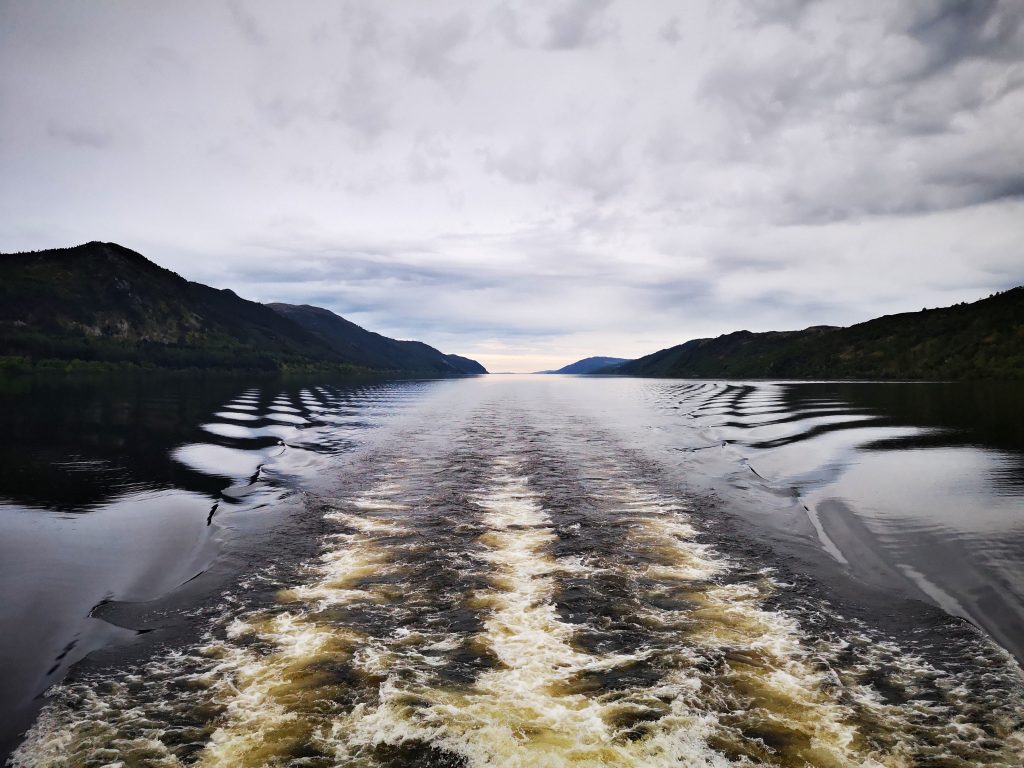
Image Source: Tales of a Backpacker
Loch Ness stands out among British lakes with its amazing depth and unique features that make it special.
Peat content and low water visibility
The loch’s waters look unusually dark because of high concentration of peat particles flowing in from nearby highlands. You can barely see four inches underwater in these very poor visibility conditions. Rainwater picks up tannins and other organic compounds as it moves through the peat bogs that cover the surrounding area. The water looks like tea and blocks light from going deep. This dark, murky water makes it easy to mistake what lies beneath the surface, and small ripples look bigger against the dark background.
Why Loch Ness never freezes
The loch never freezes, not even during Scotland’s coldest winters. This happens because of something called the “thermocline effect”. The top 100 meters of water gets denser as it cools in winter and sinks down. Warmer water from below takes its place. Deep water below 150 feet (46 meters) stays at 5-7°C (44-45°F) all year round. Nature created its own heating system here. Sometimes you’ll see fog floating over the loch when the water is much warmer than the air around it.
Water volume and flow through River Ness
Loch Ness holds more water than any other lake in Britain. Water comes from several rivers including the Oich and Enrick, covering more than 700 square miles (1,800 square km). The River Ness carries water out of the loch and flows northeast into the Moray Firth at Inverness. The loch’s huge size helps control water flow – during bad floods, water flowing in might reach 3,000 m³/s, but outflow to River Ness stays under 1,000 m³/s. Water levels usually change by just one meter in normal conditions.
Conclusion
Loch Ness is much more than just a home to monster stories – it’s an amazing geological marvel. You’ll be amazed to know this Scottish landmark reaches depths of 230 meters (755 feet), making it Scotland’s second deepest loch. The water volume here is incredible. While not the country’s deepest, Loch Ness holds more water than all lakes in England and Wales put together – a massive 7.5 cubic kilometers that makes it the British Isles’ largest lake by volume.
Nature showed its raw power in creating this impressive water body. The Great Glen Fault’s ancient tectonic shifts and massive glacial erosion during the last Ice Age carved this deep trench into the Scottish Highlands. Advanced sonar technology has helped modern scientists confirm these measurements and put to rest any questions about mysterious deeper spots in the loch.
The loch’s unique character comes from its distinctive ecological features. You can only see about four inches below the surface through its dark, peaty waters – one reason why this place keeps its mysterious atmosphere. The water never freezes thanks to a fascinating thermocline effect that keeps temperatures steady all year, even during Scotland’s coldest winters.
The real magic of Loch Ness becomes clear when you look at the science behind it. This geological masterpiece took millions of years of Earth’s history to form. The Loch Ness Monster might grab headlines, but the true story of this loch’s depth, volume, and formation is just as fascinating. It’s a tale written not in folklore but in the language of science and natural history.
Key Takeaways
Discover the remarkable scientific facts behind Scotland’s most famous lake that go far beyond monster legends:
• Loch Ness plunges to 230 meters (755 feet) deep, making it Scotland’s second deepest loch and containing more water than all English and Welsh lakes combined.
• The Great Glen Fault and glacial erosion over millions of years carved this extraordinary trench, creating the largest lake by volume in the British Isles.
• High peat content creates tea-colored water with only 4-inch visibility, while a natural thermocline effect keeps the loch from ever freezing.
• Modern sonar mapping has definitively confirmed the loch’s dimensions, debunking claims of mysterious deeper trenches or crevices.
• Despite ranking second in depth after Loch Morar, Loch Ness holds 7.5 cubic kilometers of water due to its impressive length of 36 kilometers and consistent depth profile.
The true wonder of Loch Ness lies not in mythical creatures, but in the powerful geological forces that created one of Britain’s most impressive natural features.
FAQs
Q1. How deep is Loch Ness at its deepest point? Loch Ness reaches a maximum depth of 230 meters (755 feet) at its deepest point, making it the second deepest loch in Scotland.
Q2. Why does Loch Ness never freeze over? Loch Ness never freezes due to a “thermocline effect.” As the top layers cool and sink, warmer water from below rises, maintaining a consistent temperature of 5-7°C (44-45°F) below 150 feet deep year-round.
Q3. Is it safe to swim in Loch Ness? Swimming in Loch Ness is not recommended due to its extremely cold temperatures and poor visibility. The high peat content in the water limits visibility to only about four inches beneath the surface.
Q4. How does Loch Ness compare to other lakes in the UK? While not the deepest, Loch Ness is the largest lake by volume in the British Isles, containing more water than all lakes in England and Wales combined. It holds approximately 7.5 cubic kilometers of water.
Q5. What geological features contributed to the formation of Loch Ness? Loch Ness was formed by a combination of tectonic activity along the Great Glen Fault and massive glacial erosion during the last Ice Age. These forces carved out the deep trench that became Loch Ness over millions of years.