01463 223243
 Find
Find Book
Book


Key Takeaways
The Loch Ness Monster legend spans 1,500 years of documented history, from ancient Pictish carvings to modern scientific expeditions, revealing a fascinating blend of folklore, hoaxes, and unexplained phenomena.
• Ancient Pictish carvings from 300-900 AD feature an unidentified water beast, comprising 40% of their animal depictions centuries before modern Nessie tourism existed.
• Many famous “evidence” pieces were elaborate hoaxes, including the iconic Surgeon’s Photo (toy submarine model) and hippo footprint tracks from umbrella stands.
• Operation Deepscan’s £1 million sonar sweep in 1987 detected unexplained 3-4 metre moving objects that scientists still cannot definitively identify or explain.
• Loch Ness’s unique characteristics—pitch-black peaty waters, 230-metre depth, and geological fault line—create perfect conditions for both misidentification and concealment.
• The legend persists because it represents humanity’s fascination with unexplained mysteries, drawing over one million visitors annually to Scotland’s most famous loch.
The enduring appeal of Nessie lies not in proving her existence, but in celebrating the mystery that connects us across cultures and generations, where science and folklore continue to dance together in Scotland’s dark waters.
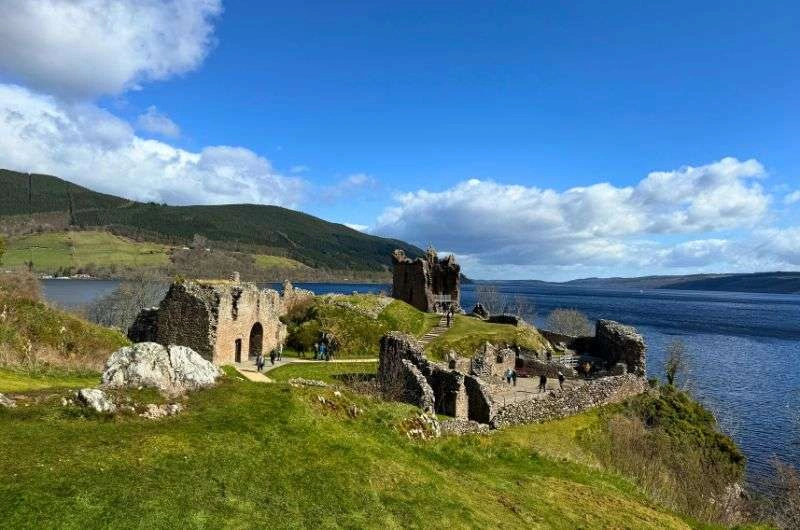
The Loch Ness Monster has a richer history than most people think. St Columba made the first recorded sighting of Nessie in 565 AD when he came across the mysterious creature during a swim.
Nessie’s story goes beyond common knowledge, and the truth about Loch Ness is absolutely fascinating. This iconic Scottish lake holds an incredible 263 billion cubic feet of water and stands as the UK’s largest body of water. The massive loch defies Scotland’s cold climate and never freezes, with its temperature staying at five degrees throughout the year.
Scientists and enthusiasts have been fascinated by the search for this legendary creature. The 1987 Operation Deepscan serves as a prime example, with its £1 million budget and fleet of 24 boats scanning the loch. The lake’s immense volume surpasses all the lakes of England and Wales combined, offering ample hiding spots away from human sight. Would you like to find fifteen Loch Ness Monster facts that leave scientists puzzled even today?
The Pictish Carvings of a Water Beast

Image Source: Wee Wild Adventures
Stone carvings tell the oldest tales of a mysterious creature in Loch Ness. These stories predate written records. The Picts—a Celtic group living in the Scottish Highlands between 300 and 900 AD—left behind the most important Loch Ness monster facts that stretch back approximately 1,500 years.
Origin of the Pictish Carvings
The Picts created countless carved standing stones throughout northern Scotland that serve as a visual record of their culture. These talented artists crafted their work with remarkable precision, especially when depicting animals. Their stone carvings feature lifelike creatures that anyone can identify easily. The mysterious “Pictish Beast” symbol appears in both northern and southern Pictish territories, which suggests its cultural importance spread throughout their realm.
Why It’s Mysterious
The sort of thing I love about these carvings is how one creature stands out among all the realistic animal depictions. This puzzling beast shows an elongated beak or muzzle, a unique head spout or locket, and flippers instead of feet. While other Pictish animal symbols are easy to recognise, this creature remains hard to identify. This unusual symbol wasn’t just a rare sight—it makes up about 40% of all Pictish animal depictions, showing its extraordinary role in Pictish culture.
What Scientists Say
Scientists still debate what the Pictish Beast represents. Several theories have emerged:
Many researchers believe it shows a marine mammal, possibly a dolphin or whale, based on the water spout from its head and swimming position. Other experts suggest more exotic possibilities like an elephant, anteater, seahorse, or the mythical kelpie (water horse) from Celtic folklore.
The Pictish Beast appears in connection with a documented account of a water creature. Adomnán’s Life of Columba, written at the end of the seventh century, describes how St. Columba encountered a water beast in the River Ness. This connection has led researchers to link the Pictish Beast carvings with early sightings of an unusual creature in Loch Ness.
Modern scholars may still debate the symbol’s meaning, but one fact stands clear—the Picts saw this mysterious aquatic creature as important enough to feature it prominently in their symbolic language for centuries.
St Columba’s Encounter in 565AD

Image Source: National Catholic Register
The Loch Ness Monster’s first documented sighting dates back nearly 1,500 years, making it one of the oldest recorded monster facts in history. An Irish missionary reportedly came face-to-face with a mysterious creature in the River Ness, long before anyone had cameras or sonar equipment.
Origin of the St Columba Legend
Adomnán, the ninth abbot of Iona, wrote about St Columba’s encounter in “Life of St Columba” roughly 100 years after it happened. The account tells us that in 565 AD, Columba was near Loch Ness when he found locals burying a man killed during a swim. After learning that a “water beast” had attacked the victim, Columba made a daring choice.
The story describes how Columba asked one of his followers, Luigne moccu Min, to swim across the river. The beast surfaced and charged toward him as he entered the water. Columba raised his hand, made the sign of the cross, and commanded: “Go no further. Do not touch the man. Go back at once.” The creature retreated immediately, “as if pulled back with ropes.”
Why It’s Mysterious
This early account puzzles researchers because it appeared more than 1,300 years before Nessie became a tourist attraction. The tale describes a water-dwelling beast that could attack humans near Loch Ness. The story spread naturally, at a time when no one had any reason to make up monster stories for profit.
What Scientists Say
The ancient text’s reliability divides scholarly opinion. Some researchers point out that saint biographies usually included miracles to showcase their holiness. The account’s detailed nature suggests it might have stemmed from a real event, in spite of that.
Adrian Shine, who leads research at the Loch Ness Project, thinks the story might describe an encounter with a large sturgeon that could grow up to 4 metres long. Professor Gareth Williams from University College London offers a different view – the tale might have served to show Christianity’s dominance over pagan beliefs.
The 1933 Roadside Sighting

Image Source: Historic UK
The Loch Ness Monster captured the world’s imagination in 1933. A series of sightings that year changed how people view Scotland’s most famous loch forever.
Origin of the 1933 Sighting
The tale that made Nessie a global sensation unfolded on 22 July 1933. George Spicer and his wife drove along the road between Dores and Foyers. Something extraordinary crossed their path about 200 yards ahead. Mr Spicer described “a most extraordinary form of animal” – its body stood 4 feet high and stretched 25 feet long. The creature had a long, wavy neck as thick as an elephant’s trunk, but they couldn’t spot any limbs.
Mr Spicer’s description painted the creature as “a dragon or prehistoric animal” that moved “in the manner of a scenic railway”. The Inverness Courier published his story on August 4, 1933. Readers flooded the paper with letters about their own sightings. The name “Loch Ness Monster” soon became part of everyone’s vocabulary.
Why It’s Mysterious
The Spicer’s tale stands out because they saw the creature on land, not in water. People struggled to believe an aquatic creature would venture onto shore. The description of a dinosaur-like beast with a long neck matched people’s idea of what a “living fossil” might look like.
The story’s timing matters too. The loch stayed hidden from most visitors until 1933. That year, a new road opened up clear views of the water. People started reporting more sightings as the area became easier to reach.
What Scientists Say
Columbia University researchers came up with an interesting idea about the Spicer account in 2013. They thought the popular film King Kong, which showed a long-necked dinosaur in a lake, might have influenced what the Spicers saw. The couple had watched the film recently, so scientists speculate they might have seen things through that lens.
Some experts have a simpler explanation. They think the Spicers might have seen deer jumping across the road with a fawn – which would explain both the movement pattern and what looked like a small animal in its mouth.
The Surgeon’s Photo Hoax

Image Source: PBS
The iconic “Surgeon’s Photo” stands as the most influential piece of evidence that cemented the Loch Ness Monster’s place in public imagination. Some of the most fascinating Loch Ness monster facts revolve around this single image.
Origin of the Photo
The Daily Mail published what became the definitive image of Nessie in April 1934. London gynaecologist Robert Kenneth Wilson claimed he took this photograph that showed a long-necked creature emerging from Loch Ness’s rippled waters. He said he captured the image while walking near the shore. The photo earned its nickname “the Surgeon’s Photo” because Wilson didn’t want his name linked to it.
This image grabbed worldwide attention right away. It matched everyone’s mental picture based on earlier descriptions – a creature with prehistoric features, a long neck and a small head. The photograph remained the most compelling proof of Nessie’s existence for many years.
Why It’s Mysterious
The sort of thing I love about this photograph is how long it remained credible. Photography experts questioned whether it was real, yet the image appeared in books, documentaries, and news stories about unexplained phenomena. The photo matched people’s expectations of a surviving plesiosaur perfectly, which supported the popular theory that Nessie could be a prehistoric creature that survived extinction.
What Scientists Say
The truth came out in 1994 when the hoax was finally exposed. Christian Spurling made a deathbed confession – he had helped create a model mounted on a toy submarine. Spurling was the stepson of Marmaduke Wetherell, a big game hunter the Daily Mail had previously embarrassed for discovering fake Nessie footprints. Wilson wasn’t even the real photographer – he just acted as a respected front man to the prank.
Experts now see the Surgeon’s Photo as a reminder of how evidence can be manipulated easily. The image’s silhouette lives on as the classic representation of the Loch Ness Monster in popular culture, even though we know it’s fake.
The Hippo Footprint Prank

Image Source: Vox
The hippo footprint incident stands as one of the most embarrassing chapters in Nessie hunting history, among countless Loch Ness monster facts gathered over decades.
Origin of the Footprints
In December 1933, the Daily Mail hired Marmaduke Wetherell, a big-game hunter, to find evidence of the mysterious creature. After just a few days at Loch Ness, Wetherell made a bold announcement—he had found massive footprints along the shoreline. These weren’t ordinary tracks. Wetherell believed they belonged to “a very powerful soft-footed animal about 6 metres long”. He made plaster casts of the prints and sent them to London’s Natural History Museum for analysis.
Why It’s Mysterious
The public’s quick acceptance of potential Nessie evidence makes this incident compelling, even after experts proved it false. The footprints appeared right after the road near Loch Ness opened, which made the previously hidden waters easier to access and view. This “discovery” helped establish the monster’s legend at a crucial time when public interest grew faster.
What Scientists Say
Natural History Museum experts quickly uncovered the truth behind these mysterious footprints. Their zoologists determined the tracks were similar and matched the footprints of a hippopotamus. The source was likely a decorative umbrella stand or ashtray with a preserved hippo foot base. The Daily Mail publicly mocked Wetherell after this revelation. This humiliation drove him to seek revenge, which would later show up in another famous Nessie hoax.
Operation Deepscan’s Strange Sonar Readings

Image Source: Getty Images
The most ambitious search for the Loch Ness Monster happened in 1987. Scientists conducted a complete sonar sweep that produced puzzling results that still fascinate monster hunters today.
Origin of Operation Deepscan
Operation Deepscan changed how people searched for the Loch Ness monster. Amateur hunts evolved into scientific investigations. The massive project used 24 boats with advanced sonar technology that lined up across the loch’s width. The boats swept the waters methodically for three days in October 1987 and created what scientists called “an acoustic net” that would detect any substantial object. The project, costing approximately £1 million, became the largest search anyone had conducted.
Why It’s Mysterious
The sort of thing I love about Operation Deepscan wasn’t what researchers found—but what they couldn’t explain. The sonar equipment picked up several large, unexplained objects underwater. Sonar operator Darrell Laurence spotted a moving object roughly 3-4 metres long. Scientists found no normal explanation for these readings. The mysterious signals matched what you’d expect from a large animal but didn’t match any known creatures living in the loch.
What Scientists Say
Scientists still debate about these unusual readings. Some experts think they were probably large fish shoals or thermal layers in the water that created false echoes. Others, including Adrian Shine who helped run the operation, admit the readings remain truly unexplained. This uncertainty fuels both scientific curiosity and the enduring mystery that makes Loch Ness facts so fascinating.
The BBC’s 2003 Nessie Hunt
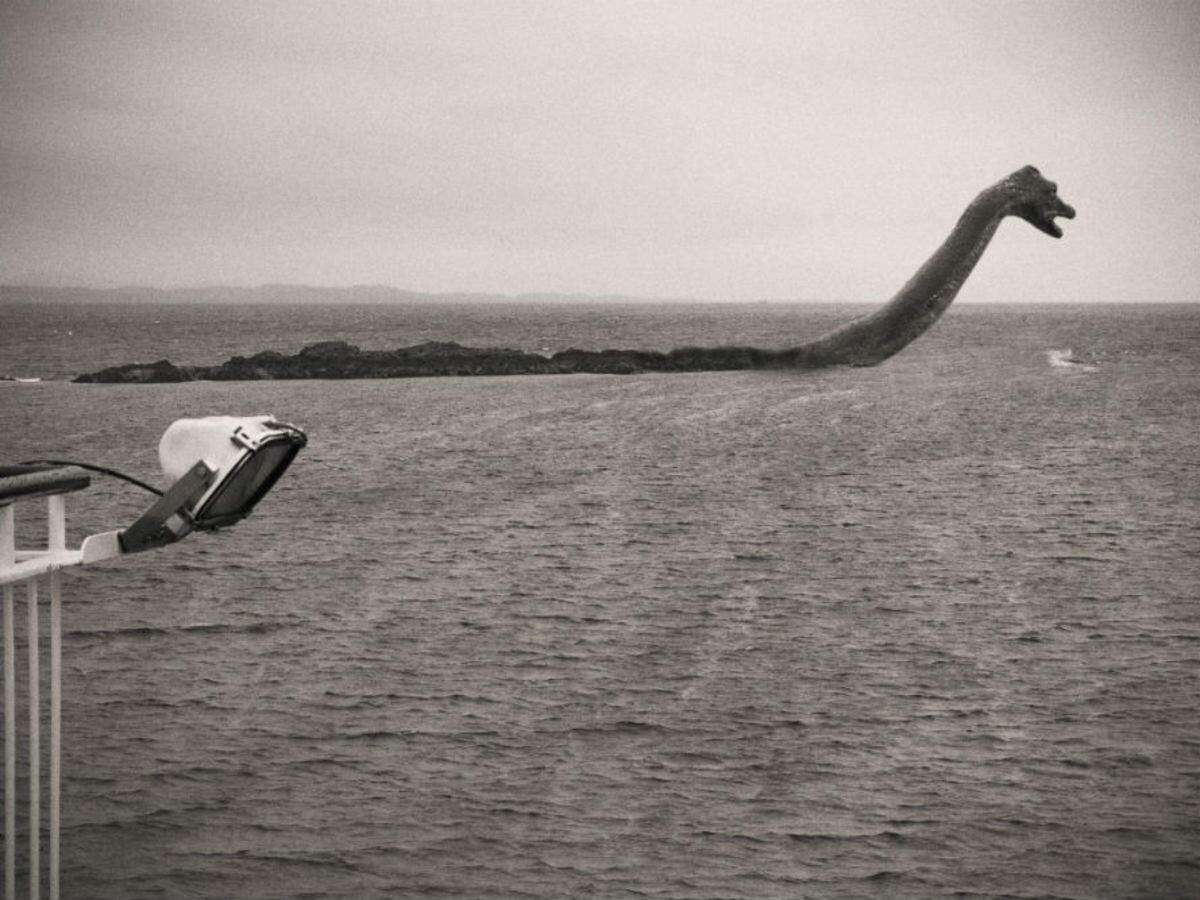
Image Source: Gizchina.com
The BBC launched what they called the “definitive” search for the mysterious Loch Ness creature in the early 2000s. This became another major attempt to settle the loch ness monster facts versus fiction debate.
Origin of the BBC Search
The British Broadcasting Corporation put together a scientific team in 2003. They gave them 600 separate sonar beams and satellite tracking technology. Their big mission was to conduct the most detailed search anyone had ever tried in the mysterious loch. The team used chartered boats and set up advanced equipment that could spot anything in the water – even something as tiny as a candy wrapper across the lake’s 23-mile length.
Why It’s Mysterious
The results were baffling. The team searched for days with advanced technology but found nothing at all. No monster appeared. They didn’t even find a sturgeon or an odd-shaped log. This total lack of evidence became a puzzling loch ness fact. People wondered how something hundreds of witnesses claimed to see could leave no trace.
What Scientists Say
Lead scientist Ian Florence came to a simple conclusion – the monster doesn’t exist. All the same, some researchers noted that Loch Ness has many more underwater caves and crevices where something could hide. More interesting still, folklore experts say these empty results just add to Nessie’s mystery. A local tour guide put it best: “Any beastie clever enough to hide for centuries would definitely know to avoid a flotilla of noisy BBC boats.”
The Great Glen Fault Line

Image Source: History of Geology
Something even more extraordinary lies beneath the mysterious waters of Loch Ness—a massive geological crack that splits Scotland in half. The Great Glen Fault stands out as one of the most fascinating loch ness facts that might explain some of the monster phenomena.
Origin of the Fault Line
Two ancient continental plates collided about 400 million years ago to create the Great Glen Fault. This ruler-straight crack stretches southwest to northeast for over 60 miles across the Scottish Highlands. The fault serves as a ‘suture’ where two landmasses merged to form what we now call Great Britain. The massive loch took shape when glacial erosion carved out the deep basin during the ice age.
Why It’s Mysterious
The sort of thing I love about this geological feature is that it extends an astonishing 60 kilometres down to Earth’s crust’s base. Seismic activity continues in the fault, which produces about three earthquakes per century at Richter 4. These tremors and the fault’s movement can create bubbles and waves on the lake’s surface. Some researchers believe these natural events might explain certain Nessie sightings.
What Scientists Say
Italian geologist Luigi Piccardi hypothesised that Nessie’s appearances with “strong shaking” might actually be records of seismic activity. Most researchers point out that major earthquakes (1816, 1888, 1890, 1901) don’t match periods of increased monster sightings. The fault’s presence adds another dimension to the complex loch ness monster facts that captivate visitors today.
The Loch’s Peaty, Pitch-Black Waters

Image Source: Tartan Vibes Clothing
The monster mystery of Loch Ness has a lesser-known yet crucial aspect – its incredibly dark waters. The visibility here extends just beyond your arm’s reach.
Origin of the Peaty Waters
Loch Ness gets its distinctive darkness from the surrounding landscape. Peat bogs cover the highlands around the loch. Rainwater seeps through these organic-rich soils before flowing into the lake. This process pulls tannins and other organic compounds into the water. The result resembles tea-coloured water that blocks most light from penetrating deep.
Why It’s Mysterious
These peaty waters create the perfect setting for misidentification. The water’s opacity keeps most objects hidden beneath the surface. You might only catch glimpses of what lies below. Simple things like floating wood or deer swimming can appear strange and mysterious. The dark background also makes wave patterns stand out dramatically. Even small ripples look magnified against this murky canvas.
What Scientists Say
The murky conditions pose significant challenges to scientific research. Standard underwater cameras become useless after just a few feet. Divers have reported zero visibility past 7 metres deep. This creates a massive hidden space where something could stay concealed for hundreds of years. The lake’s darkness continues to guard its secrets effectively.
The Loch That Never Freezes

Image Source: WSVN
Scotland has many natural wonders, but one loch ness fact stands out—Loch Ness never freezes, even during the country’s harsh winters.
Origin of the Temperature Phenomenon
People have noticed this unusual trait for hundreds of years. The first written record comes from 1527, when Hector Boece, Principal of King’s College Aberdeen, wrote about it in his “History of Scotland”. The loch stays at 5.5°C (42°F) all year. The water remains liquid even as nearby lochs freeze solid enough for cattle drovers to walk across.
Why It’s Mysterious
The loch’s refusal to freeze puzzles many since Scottish winters can reach -20°C. The water creates an otherworldly scene on very cold days as steam rises from its surface. Local folklore suggests this strange quality had healing powers—frozen animals would “melt and dissolve hastily” when placed in these waters.
What Scientists Say
Scientists point to the “thermocline effect” to explain this phenomenon. Cold surface water sinks while warmer water rises to replace it. The loch’s massive depth and volume keep this cycle going endlessly, which stops ice from forming. Deep water below 150 feet (46 metres) maintains a steady temperature of 45 degrees Fahrenheit (7.2 degrees Celsius). This creates nature’s own heating system.
The Mysterious Cherry Island

Image Source: Bunnik Tours
A visit to Loch Ness reveals something unexpected – the famous lake isn’t just a vast expanse of water. The southwestern shore hides Cherry Island (Eilean Mhuireach in Gaelic), the only island you’ll find in this 23-mile stretch of water.
Origin of Cherry Island
This island isn’t a natural formation at all. It’s actually an artificial structure called a crannog that dates back to the Iron Age. The island used to be 160 feet by 168 feet across, but it’s much smaller now. Water levels rose during the Caledonian Canal’s construction in the early 1800s. The locals built this wooden-planked and stone-based platform as a safe haven when they felt threatened. The sort of thing I love is that a 15th-century castle once stood on this tiny outpost. They built it from stone and oak, and it likely served as a fortified shelter.
Why It’s Mysterious
The story gets more interesting. A second natural island called Dog Island (Eilean Nan Con) used to exist nearby. It vanished under the rising waters. This disappearance adds another layer to the local folklore. A webcam caught something strange in January 2023 – a 20-foot object moved through the water toward Cherry Island before it disappeared from view. This sighting started new discussions about what might live beneath the surface.
What Scientists Say
Scientists found “vitrified matter” on the island – stone that melted from extreme heat – like Scotland’s puzzling vitrified forts. Some researchers speculate Cherry Island was a hunting lodge, while Dog Island housed hunting hounds. In spite of that, Cherry Island needs more research, giving visitors another fascinating loch ness fact to think about.
The Disappearance of the Sherlock Holmes Prop

Image Source: Reddit
A peculiar disappearance occurred beneath Loch Ness’s dark waters in 1969. The vanished object wasn’t a prehistoric creature, but rather a “monster” of a different kind. This fascinating loch ness fact connects Hollywood magic with a famous detective’s tale.
Origin of the Film Prop
Talented special effects artist Wally Veevers created a remarkable 30ft (9m) Loch Ness Monster model to use in Billy Wilder’s 1970 film “The Private Life of Sherlock Holmes”. The prop’s design featured a long neck and two humps that would serve as a disguised submarine in the movie’s plot. The director demanded the humps’ removal despite warnings about potential buoyancy issues. The model sank during its test run, just as predicted. Wilder stood beside Veevers and watched their creation slip beneath the waves.
Why It’s Mysterious
The prop disappeared into the depths of Loch Ness and remained hidden for nearly 50 years. The story took an ironic twist – while the fictional detective solved the fake monster’s case in the film, the actual prop became a real mystery in the loch’s murky waters.
What Scientists Say
Munin, an underwater robot, discovered the lost model 180 metres below the surface in 2016. The research team identified the prop through its unique neck-without-humps design, specific location, and precise measurements. Scientists finally found a monster in Loch Ness – though not the one monster hunters had dreamed of finding.
The Loch Ness Muppet Hoax

Image Source: Vox
The 1977 “Loch Ness Muppet” photograph stands out as one of the most bizarre Nessie frauds, thanks to its strange qualities and far-fetched backstory.
Origin of the Muppet Photo
Anthony “Doc” Shiels took what would become a famous photograph on May 21, 1977. He described seeing a “smooth, glossy beast with powerful muscles” during his camping trip near Urquhart Castle. The Daily Mail featured this image prominently on its front page. Shiels wasn’t your typical tourist – he called himself the “Wizard of the Western World” and worked as a psychic entertainer, magician, artist, and writer. He claimed his psychic powers helped him summon the creature from the depths just to take that photo.
Why It’s Mysterious
The photograph’s most puzzling aspect shows the monster with an unusual see-through quality. The creature had a white spot at its neck’s base, which Shiels later claimed was one of its eyes. His story grew more elaborate in later interviews when he proposed that Nessie wasn’t a plesiosaur at all. Instead, he suggested it was a massive freshwater cephalopod he named the “elephant squid”.
What Scientists Say
Scientists found several red flags in the image. The water showed no ripples around the neck, the monster looked staged, and the photo appeared unnaturally clear. The scientific community rejected the photo’s authenticity. They noted Shiels’s connection to other proven hoaxes, including photos of “Morgawr” – a Cornish sea monster that turned out to be nothing more than plasticine models.
The Apple Maps Nessie Glitch

Image Source: Forbes
Nessie hunters found an unexpected new place to look for the monster—not in Scotland’s murky waters but right on their smartphones. Apple Maps users made one of the most unusual loch ness monster facts when they spotted what looked like a massive creature hiding under the famous loch’s surface in April 2014.
Origin of the Apple Maps Image
Two men, Andrew Dixon and Peter Thain, stumbled upon a strange shape while looking through Apple Maps. Dixon, who works at a charity in Darlington, said “It was a total fluke that I found it”. The mysterious figure resembled a 100-foot long creature that seemed to swim just below the surface at Loch Ness’s northern end. The strange sight showed up only in Apple Maps and wasn’t visible anywhere in Google’s satellite pictures.
Why It’s Mysterious
This image caught everyone’s attention because it was incredibly clear. The ghostly oval shape had trailing white tendrils that matched people’s imagination of a giant underwater beast from above. The Official Loch Ness Monster Fan Club spent months studying these images before they called it something important. The mystery deepened because boats were visible nearby, but nothing could explain this strange formation.
What Scientists Say
Scientists came up with a simpler explanation. The “creature” turned out to be a boat’s wake from January 2005. Satellite images work differently than regular photos—they’re actually multiple pictures stitched together like panoramas. This process can create weird effects when it combines images that have different contrast levels. Thaler wrote on Southern Fried Science and showed how a partly visible boat in one image mixed with blue water in another creates exactly the “monster” effect that people saw in Apple Maps.
The Tim Dinsdale Film Footage

Image Source: Tetrapod Zoology
The Tim Dinsdale film stands as a pivotal moment in the search for Scotland’s mysterious creature. This piece of evidence ranks among the most compelling loch ness monster facts ever documented.
Origin of the Footage
The story began on a misty morning of April 23, 1960. Tim Dinsdale, an aeronautical engineer, captured about 50ft of 16mm film that showed a dark hump moving across Loch Ness. He shot this remarkable footage from Foyers on his expedition’s final day. The object reminded him of “the back of an African buffalo”. He started filming as soon as he spotted something unusual about 1,300 yards away that moved in a zigzag pattern. The footage became even more significant because he also filmed a boat following the same route to serve as a comparison.
Why It’s Mysterious
The footage captivates viewers with its distinctive V-shaped wake that shows no visible propeller wash. This mysterious object moves at 7-10mph and appears to partially submerge while maintaining its speed. The film sparked Dinsdale’s 27-year quest and led him to establish the Loch Ness Phenomenon Investigation Bureau. Many experts called it the strongest proof of Nessie’s existence for decades.
What Scientists Say
The Joint Air Reconnaissance Intelligence Centre (JARIC) looked at the film in 1965 and concluded the object was “probably animate”. Modern analysis tells a different story. Critics highlight that Dinsdale filmed the comparison boat under different light conditions. Digital enhancement shows a consistent pale blob that matches a helmsman’s position in a typical fishing boat. The debate rages on about whether this footage shows extraordinary evidence or just captures a boat in poor visibility.
Comparison Table
| Incident/Fact | Year/Period | Type | Location | Key Witnesses/Sources | Scientific Explanation |
| Pictish Carvings | 300-900 AD | Archaeological | Northern Scotland | Pictish stone carvings | Marine mammals or mythical creatures appear in these depictions |
| St Columba’s Encounter | 565 AD | Written Account | River Ness | St Columba, Adomnán | A large sturgeon or religious symbolic narrative might explain this |
| The Spicer Sighting | 1933 | Land Sighting | Dores-Foyers Road | George & Mrs Spicer | Deer crossing with fawn provides a likely explanation |
| The Surgeon’s Photo | 1934 | Photograph | Loch Ness | Robert Kenneth Wilson | Later proved to be a hoax using a toy submarine |
| The Hippo Footprint | 1933 | Physical Evidence | Loch Shore | Marmaduke Wetherell | Created artificially using a hippo foot umbrella stand |
| Operation Deepscan | 1987 | Sonar Survey | Full Loch | 24 boats, £1M operation | Several unexplained objects, 3-4m in length, showed movement |
| BBC Hunt | 2003 | Scientific Survey | Full Loch | BBC research team | Researchers found no conclusive evidence |
| Great Glen Fault | Present | Geological Feature | Full Loch | N/A | Surface disturbances result from natural seismic activity |
| Cherry Island | Iron Age-Present | Artificial Island | SW Shore | Archaeological records | Humans created this crannog structure |
| Sherlock Holmes Prop | 1969 | Film Prop | Loch Ness | Billy Wilder film crew | A robot discovered this at 180m depth in 2016 |
| Apple Maps Sighting | 2014 | Satellite Image | Northern Loch | Andrew Dixon, Peter Thain | Analysis revealed this as a boat wake in the image |
| Dinsdale Film | 1960 | Film Footage | Foyers | Tim Dinsdale | Poor visibility suggests this was likely a boat |
Conclusion
The legend of the Loch Ness Monster has engaged imaginations worldwide for centuries. History, folklore, and scientific research blend into one of Scotland’s most enduring mysteries. These fifteen baffling facts might make you question whether Nessie truly exists beneath those dark, peaty waters or lives only as a product of wishful thinking and clever hoaxes.
The evidence stretches back nearly 1,500 years to ancient Pictish carvings and St Columba’s encounter, well before tourism reached the loch. Without doubt, people have debunked many reported sightings. The Surgeon’s Photo, hippo footprints, and the “Muppet” photograph serve as warnings about our readiness to believe. Notwithstanding that, other events like Operation Deepscan’s unexplained sonar contacts and Tim Dinsdale’s mysterious footage still resist simple explanation.
The loch’s unique features add to Nessie’s lasting mystery. Pitch-black waters, remarkable depth, and an unusual thermocline prevent freezing. An active fault line beneath creates perfect conditions for misidentification, yet also offers an ideal hiding place for something unexpected.
A visit to Loch Ness reveals where science and folklore naturally merge. Local guides tell stories passed through generations while research vessels with innovative technology scan nearby waters. This mix creates a unique charm that attracts over a million visitors yearly to Scotland’s famous loch.
Nessie’s existence as a real creature, cultural phenomenon, or marketing strategy matters less than what the legend symbolises. The monster reflects our fascination with the unexplained, our joy in possibilities that science hasn’t ruled out, and our love for mysteries that bind us across time and culture.
The Loch Ness Monster story is nowhere near just a few famous photographs. Nessie’s tale spans millennia and includes scientific expeditions worth millions. The mystery continues to dodge definitive answers and will engage minds for generations ahead.
Key Takeaways
The Loch Ness Monster legend spans 1,500 years of documented history, from ancient Pictish carvings to modern scientific expeditions, revealing a fascinating blend of folklore, hoaxes, and unexplained phenomena.
• Ancient Pictish carvings from 300-900 AD feature an unidentified water beast, comprising 40% of their animal depictions centuries before modern Nessie tourism existed.
• Many famous “evidence” pieces were elaborate hoaxes, including the iconic Surgeon’s Photo (toy submarine model) and hippo footprint tracks from umbrella stands.
• Operation Deepscan’s £1 million sonar sweep in 1987 detected unexplained 3-4 metre moving objects that scientists still cannot definitively identify or explain.
• Loch Ness’s unique characteristics—pitch-black peaty waters, 230-metre depth, and geological fault line—create perfect conditions for both misidentification and concealment.
• The legend persists because it represents humanity’s fascination with unexplained mysteries, drawing over one million visitors annually to Scotland’s most famous loch.
The enduring appeal of Nessie lies not in proving her existence, but in celebrating the mystery that connects us across cultures and generations, where science and folklore continue to dance together in Scotland’s dark waters.
FAQs
Q1. What is the current scientific consensus on the Loch Ness Monster? Most scientists consider the Loch Ness Monster to be a myth, explaining alleged sightings as misidentifications of ordinary objects, hoaxes, or wishful thinking. However, some researchers continue to investigate unexplained phenomena in the loch.
Q2. Are there any recent credible sightings of the Loch Ness Monster? While numerous sightings are reported each year, none have provided conclusive evidence of a large unknown creature. Modern technology like underwater cameras and sonar have yet to capture definitive proof of the monster’s existence.
Q3. Could the Loch Ness Monster be a giant eel? Recent studies suggest it’s highly improbable for giant eels to match reported Nessie sightings. While eels likely inhabit Loch Ness, there’s no evidence of specimens large enough to account for the described monster.
Q4. Why does Loch Ness never freeze over? Loch Ness maintains a constant temperature of about 5.5°C year-round due to its immense depth and volume. This ‘thermocline effect’ prevents ice formation even in Scotland’s harshest winters.
Q5. What was Operation Deepscan and what did it find? Operation Deepscan was a £1 million sonar survey of Loch Ness conducted in 1987. While it didn’t find definitive proof of a monster, it detected several large, unexplained moving objects that continue to intrigue researchers.