01463 223243
 Find
Find Book
Book


Ready to discover the Scottish Highlands’ best-kept secrets? While Ben Nevis draws a staggering 100,000 hikers every year, the most magical highland treasures sparkle quietly away from the crowds!
Sure, the iconic 516-mile North Coast 500 route and legendary Loch Ness (with monster sightings dating back to 565 CE) capture headlines, but the true highland gems hide in plain sight! Picture this: 47 centuries-old whisky distilleries scattered across the region, dramatic landscapes around Fort William (the UK’s outdoor capital), and countless secret spots that locals guard like precious family heirlooms.
These 15 hidden beauties will add serious sparkle to your 2025 highland adventure! From pristine lochs that mirror ancient mountains to remote beaches where your footprints might be the only ones, these secret locations promise experiences that’ll leave you absolutely breathless. So why not treat yourself to something extraordinary? Lace up those walking boots and prepare to fall head over heels for the Scottish Highlands’ most enchanting secrets! ✨🏴
Applecross Peninsula

Image Source: Visit Scotland
Craving an escape that feels like stepping into another world? The Applecross Peninsula delivers exactly that kind of magic! This remote sanctuary (a’Chomraich in Gaelic, meaning ‘sanctuary’) stands as one of the most captivating highland treasures, offering breathtaking landscapes that leave even the most seasoned travellers absolutely spellbound.
Applecross Peninsula scenic drive
Here’s where the real adventure begins! Your journey involves conquering the legendary Bealach na Bà (Pass of the Cattle), Scotland’s highest road pass at 626m above sea level. This historic mountain pass features heart-stopping hairpin bends and gradients reaching 20%, making it one of Britain’s most thrilling drives!
Signs warn that the road is “inadvisable for learner drivers” and “unlikely to be open in winter”—but that’s precisely what makes it so exhilarating! Follow local wisdom and drive counter-clockwise around the peninsula. This approach saves the most dramatic mountain views for the grand finale as you ascend through the pass. Talk about building suspense!
Applecross Peninsula seafood spots
Food lovers, prepare to be utterly delighted! The award-winning Applecross Inn on Shore Street has earned multiple accolades including AA Best Seafood Pub in Scotland. With spectacular views across to the Isle of Skye, it specialises in locally caught seafood yet offers enough variety to satisfy every palate. Perfect for celebrating your epic drive!
The Potting Shed Restaurant (also known as The Walled Garden) takes local sourcing to extraordinary levels. Operating from the historical grounds of Applecross House, this gem prides itself on ultra-local ingredients—vegetables from the garden, seafood caught by the proprietor himself, and meat from nearby Toscaig, sometimes measured in yards rather than miles! You simply can’t get fresher than that.
Applecross Peninsula where to stay
Whether you’re seeking luxury or adventure, there’s something perfect for you:
- The Applecross Inn – The peninsula’s only hotel, offering award-winning food and accommodation
- Hartfield House Hostel – Set in its own grounds with 31 beds in various room configurations
- Self-catering options – Properties like Airdaniar Cottage, a secluded traditional croft cottage overlooking Raasay, Rona and Skye
- Unique stays – The Yurt at Cuaig offers an eco-friendly experience on a working croft, 15 minutes from a secluded beach
Applecross Campsite sits just above Shore Street with spectacular views over the bay to Skye, accommodating tents, caravans and mobile homes with electrical hook-ups available. Wake up to views that’ll make your heart sing!
Torridon

Image Source: National Trust for Scotland
Picture ancient sandstone giants that have watched over pristine lochs for an incredible 750 million years—welcome to Torridon, where Scotland’s geological wonders shine their brightest! This wilderness of water and rock offers adventurers a raw, untamed landscape that sparkles with possibilities unlike anywhere else in Britain.
Torridon mountain hikes
What makes Torridon absolutely irresistible to hikers and climbers? The uncompromising terrain paired with majestic beauty that takes your breath away! Five magnificent Munros (mountains over 3,000 feet) maintained by the National Trust await your conquest, primarily across three spectacular mountain ranges:
Liathach towers at 1,054m, and despite its intimidating name meaning “the big grey one,” this beauty rewards climbers with extraordinary views that’ll make every challenging step worthwhile! Those steep rock terraces and sheer slopes? They’re your gateway to mountain magic.
Beinn Alligin rises to 985m and truly lives up to its nickname as the “jewelled mountain”—offering one of Scotland’s most superb summit panoramas that’ll leave you absolutely dazzled.
Beinn Eighe beckons with its impressive ridge walk and the ethereal trail to Coire Mhic Fhearchair, where glacial lochans mirror the sky like nature’s own diamonds.
Perfect for beginners? Beinn Damh delivers spectacular views without technical difficulty, while Liathach challenges those ready for scrambling adventures and careful navigation.
Torridon lochside views
Where mountains meet Loch Torridon, magic happens! This impressive fjord creates the most striking contrast between looming peaks and glittering waters that dance in the Highland light.
The Torridon Mountain Views Loop (3.79 miles) treats you to spectacular vistas of both mountains and peaceful Loch Shieldaig. Follow the coastal path towards Shieldaig and you might glimpse otters playing in the shallows or sea eagles nesting majestically on Shieldaig island!
Summer months bring pure enchantment as the waters surrounding The Torridon glint magnificently in the sunshine—perfect conditions for capturing that once-in-a-lifetime photograph or simply soaking in scenery that feeds your soul.
Torridon best time to visit
May through October offers the most rewarding Highland experiences! May (National Walking Month) presents ideal conditions for conquering those magnificent mountains, while July delivers the warmest temperatures—perfect for coastal exploration or even braving a refreshing dip in Loch Torridon.
Late September still brings those long, light-filled afternoons with dramatic moods and ever-changing shades, followed by October when Highland autumn transforms the landscape into an awe-inspiring palette of gold and red that’ll make you want to stay forever.
November through early winter can be unpredictable, though experienced hikers might still enjoy the area despite shortened daylight hours. Why not plan your visit when Torridon shows off its most dazzling colours?
Glen Nevis

Image Source: Fort William
Scotland’s tallest peak guards one of the most magical highland treasures! Glen Nevis delivers jaw-dropping drama just minutes from Fort William, yet somehow manages to stay deliciously uncrowded compared to the usual tourist magnets.
Glen Nevis waterfall walk
Steall Falls absolutely steals the show—Scotland’s third-highest waterfall with a magnificent 105-metre drop that’ll leave you speechless! This spectacular cascade rewards you with one of Scotland’s finest short walks through the dramatic Nevis Gorge. The 3.5km return journey typically takes 1.5-2 hours and packs more extraordinary scenery into a brief adventure than you’d think possible.
The rocky path winds through ancient woodland before—surprise!—you emerge into Steall Meadows where the white torrent suddenly appears in all its glory. First-time visitors can’t help but gasp at this moment! Feeling adventurous? A notorious wire bridge beckons the brave to reach the very base of the falls, though you’ll need steady nerves.
Glen Nevis hiking tips
Ready to tackle Glen Nevis? Here’s your essential kit list:
- Sturdy hillwalking boots are absolutely non-negotiable—paths turn slippery after rainfall
- Pack warm, waterproof clothing even in summer because Highland weather loves surprises
- Head straight to the Upper Falls car park at Glen Nevis road’s end for the shortest route to Steall Falls
- Evening visits offer dramatically improved light conditions
Prefer gentler terrain? The 8-mile circular route from Glen Nevis Visitor Centre treats you to wonderful river views and passes the Lower Falls (Polldubh Falls)—a popular wild swimming spot for the brave!
Glen Nevis photography spots
Photographers, you’re in for a treat! The glen offers endless magical compositions:
Steall Meadows frames the falls perfectly against the dramatic mountainside. The contrast between white water and surrounding greenery creates stunning images, especially towards sunset when softer light works its magic.
Lower Falls (Polldubh Falls) provides more accessible waterfall photography with crystal-clear pools below.
Nevis Gorge presents dramatic compositions where the River Nevis crashes through narrow rocky channels—perfect for long-exposure water photography that captures the wild energy!
Why not capture your own slice of Highland magic? Glen Nevis delivers beauty that’ll make your camera (and heart) very happy indeed! 📸✨
Duncansby Head

Image Source: Tripadvisor
Picture this: towering sea stacks rising majestically from churning waters at Britain’s true northeastern edge! Duncansby Head delivers the kind of jaw-dropping coastal drama that puts the more commercialised John O’Groats to shame. This spectacular headland offers relatively peaceful encounters with some of Scotland’s most photogenic scenery.
Duncansby Head sea stacks
The magnificent Stacks of Duncansby steal the show with their imposing 60m towers that have weathered North Sea storms for approximately 6000 years. The Great Stack stands particularly proud, soaring 60m above the restless waters below like a natural cathedral reaching toward the sky!
Your perfect viewpoint awaits along the path south from the lighthouse. First, you’ll encounter the dramatic Geo of Sclaites—a massive cleft carved into ancient red sandstone cliffs. Continue onward to witness the breathtaking spectacle of Thirle Door (a natural rock arch) standing alongside these jagged sentinels. The contrast between these towering formations and the endless ocean creates pure photographic gold!
Duncansby Head puffin watching
Wildlife enthusiasts, prepare to be charmed! This coastal paradise serves as a premier stage for puffin performances, with these adorable characters gathering on grassy slopes near the giant sea stacks. Head to the fence line north of Geo of Sclaites (grid ref. ND406232) for your best chance to spot these delightful little performers.
The clifftop symphony doesn’t end there! Thousands of fulmars, kittiwakes, guillemots, razorbills, and skuas create an unforgettable sensory feast. The sight and sound of this bustling seabird metropolis will leave you absolutely mesmerised—though the distinctive coastal aromas remind you this is nature at its most authentic!
Duncansby Head walking routes
Ready for an adventure that rewards every step? The most popular route begins at the lighthouse car park, where a well-worn path guides you along dramatic clifftops toward the stacks. This accessible 20-25 minute each way journey suits most visitors perfectly.
Feeling more ambitious? The extended 3km coastal walk from John O’Groats harbour to Duncansby Head and beyond to the stacks (6km round trip) offers incredible variety. You’ll pass the charming Robert’s Haven beach and Sannick Bay before climbing to the lighthouse. Keep your eyes peeled for seals, otters, and countless seabirds throughout this coastal adventure!
Loch Maree

Image Source: NatureScot
Picture yourself gazing across Scotland’s fourth-largest freshwater loch, where ancient mountains kiss pristine waters in perfect harmony! Loch Maree spans an impressive 20 km in length with a maximum width of 4 km, creating a breathtaking canvas framed by the majestic 910-metre tall Slioch mountain. This mesmerising highland treasure often gets overlooked by hurried travellers, but trust me—you’ll want to savour every moment here!
Loch Maree kayaking
Nothing quite compares to exploring this pristine loch by paddle—it’s pure magic on the water! The Gairloch Canoe and Kayak Centre offers both half and full-day kayaking adventures from Shieldaig Lodge, giving you front-row seats to some of Scotland’s most spectacular scenery. Their full-day Loch Maree adventure (£120 per person in 2025) lets you weave between more than 60 islands surrounded by ancient Caledonian pine forest—absolutely enchanting!
Expert local guides ensure your safety while you discover the sheltered sections between these magical islands. Never kayaked before? No worries! All equipment including kayaks, paddles, buoyancy aids, and dry bags comes provided. Honestly, there’s no better way to truly appreciate this loch’s incredible beauty than from the water itself!
Loch Maree scenic drives
Your first glimpse of Loch Maree will absolutely take your breath away! The road hugging the southern shore offers countless stopping points where you can drink in the magnificent scenery. Keep your eyes peeled for Victoria Falls waterfall, tucked slightly off the beaten track on the southern side—definitely worth the short detour!
The landscape surrounding this gem showcases some of Scotland’s finest remaining Caledonian pine forest. As you continue your journey, watch for the islands scattered like jewels across the water’s surface, including Eilean Sùbhainn—unique in Great Britain for containing its own loch with an island on it!
Loch Maree local myths
This ancient loch sparkles with the most captivating legends! Isle Maree—a small, tree-covered island measuring approximately 200 x 170 metres—holds the heartbreaking tale of Viking lovers. The princess staged her death to test her prince’s love; overcome with grief, he took his own life, whereupon she, consumed with guilt, followed him in death. Their graves reportedly remain visible on the island today!
The loch even boasts its own monster—the Muc-sheilch (meaning “turtle-pig” in Gaelic)! Isle Maree was also believed to possess healing powers—sick individuals would drink from its holy well and be plunged into the loch three times.
Perhaps most delightful is the “wishing tree” tradition where visitors hammer coins into trees on the island, believing this brings good luck or makes wishes come true—a practice Queen Victoria herself participated in during her 1877 visit! So why not make a wish of your own?
Strathcarron

Image Source: Expedia
Tucked between towering Highland peaks, Strathcarron sparkles as a charming hamlet where railway heritage meets wild mountain beauty! This delightful settlement offers authentic Highland experiences without the crowds, making it one of Scotland’s most genuine hidden treasures.
Strathcarron train journey
What a spectacular rail adventure awaits! The railway journey from Inverness to Kyle of Lochalsh via Strathcarron ranks among Britain’s most breathtaking train experiences. Famously featured in Michael Palin’s BBC TV series as one of the Great Railway Journeys of the World, this magical route hugs the dramatic coastline along Loch Carron. Perfect for a memorable day trip—catch the 1048 train from Strathcarron, returning from Kyle at 1713!
From your window seat, you’ll witness absolutely stunning panoramas as the line glides alongside Loch Carron’s shimmering waters before continuing around the rocky coast to Kyle of Lochalsh. Once there, you can stroll across the bridge to explore the Isle of Skye or join organised tours. Pure Highland magic!
Strathcarron village charm
This enchanting locale boasts a cosy population of just over 300 residents, creating that intimate community atmosphere you’ll absolutely adore! Established in the late 19th century, the village was historically a crofting settlement—you can still see the pretty stone cottages scattered throughout like precious Highland gems.
The North Coast 500 route passes within half a mile of Strathcarron, yet the village maintains its peaceful tranquillity. For those seeking cultural sparkle, don’t miss Ardaneaskan Croft Museum—a seemingly dilapidated stone bothy packed with fascinating crofting artefacts. It’s like stepping back in time!
Strathcarron nearby hikes
Adventure lovers will discover 38 picturesque trails in the Strathcarron area! From gentle family walks to challenging mountain expeditions, there’s something to make every outdoor enthusiast’s heart sing. According to AllTrails, the area offers:
- 3 easy walking routes perfect for family outings
- 8 camping trails with Tom na Gruagaich and Beinn Alligin Circular rated most popular (4.8 stars)
- The challenging Cape Wrath Trail with 4,314m elevation gain
For those seeking moderate adventures, routes like Sgùrr a’ Chaorachain and Applecross to Sands Beach provide excellent options with minimal crowds. So, why not treat yourself to some Highland hiking magic? Strathcarron serves as your perfect base for exploring both coastal and mountain landscapes!
Glen Affric

Image Source: Forestry and Land Scotland
Welcome to Scotland’s crown jewel! Often celebrated as “the most beautiful glen in Scotland,” Glen Affric absolutely deserves its sparkling reputation with its ancient Caledonian pine forest dating back to the last ice age. This magnificent 30-square-mile National Nature Reserve offers you an authentic glimpse into Scotland’s original wilderness—pure magic for anyone seeking genuine highland beauty!
Glen Affric forest walks
Prepare to be dazzled by several remarkable walking routes designed for every ability level:
Plodda Falls Trail whisks you through magnificent woodland to a stunning waterfall complete with a purpose-built viewing platform! This delightful moderate ½-mile path (1km) typically takes up to an hour, though you’ll definitely want to pause frequently for photographs of those cascading waters.
Dog Falls presents three distinct trails ranging from the quick Viewpoint Trail to the more challenging Coire Loch Trail. These strenuous paths feature uneven terrain, exposed roots, and steep sections, yet reward adventurous hikers with dramatic gorge views surrounded by native deciduous trees that create the most colourful displays throughout the seasons.
River Affric Walk provides a leisurely ½-mile circular route along the banks of River Affric. Located at the very end of Glen Affric road, this trail opens into spectacular mountain vistas and serves as your perfect starting point for more challenging hill walks.
Glen Affric wildlife
The preserved ancient forest creates a vital sanctuary for rare Scottish wildlife! You might spot majestic red deer watching silently from forest edges, whilst patient observers can glimpse elusive pine martens near Coire Loch.
Bird enthusiasts should scan the skies for golden eagles and ospreys soaring overhead. Additionally, delightful red squirrels dart through trees, and the forest floor hosts diverse flora, including vibrant wildflowers during spring—nature’s own treasure chest!
Glen Affric best time to visit
Summer offers warm weather and extended daylight hours, making it popular yet crowded—consider avoiding school holidays and weekends. However, autumn transforms the glen into a spectacular display of golden and red foliage, creating a photographer’s absolute paradise as the trees change colour.
Spring presents another excellent option as yellow gorse blooms across the landscape, accompanied by returning migratory birds. Regardless of season, prepare for rapid weather changes typical of the Scottish Highlands—but trust us, every moment will be worth it!
Sandwood Bay

Image Source: John Muir Trust
Picture yourself on Britain’s most spectacular hidden treasure—a beach so breathtaking it feels like stepping into a dream! Sandwood Bay delivers the ultimate coastal sparkle, where a mile-long stretch of pink-white sand creates such pristine beauty you’ll hesitate to leave footprints on its shimmering surface.
Sandwood Bay remote beach
This coastal jewel sits magnificently on the far north-west coast, earning its reputation as the most remote beach in the United Kingdom. What makes this place absolutely magical? The dramatic cliffs embrace the bay like nature’s own amphitheatre, whilst Am Buachaille (Gaelic for “the shepherd”) stands as a majestic 150-foot sentinel of Torridonian sandstone!
The bay curves gracefully towards the wild edgelands of Cape Wrath, where no ships have met their fate since 1828 thanks to the lighthouse’s guiding light—though ancient shipwreck secrets lie buried beneath the sand. Local folklore adds extra enchantment with tales of a mysterious mermaid spotted in 1900 and the ghost of a shipwrecked mariner who once knocked on cottage windows during fierce storms!
Sandwood Bay hiking route
Why not treat yourself to one of Scotland’s most rewarding adventures? The 4-mile journey from Blairmore car park (north-west of Kinlochbervie on the single-track B801) typically takes 1.5-2 hours each way, crossing beautiful exposed moorland on a well-marked path.
The trek itself sparkles with panoramic views of the north-west Highlands! Then comes the magical moment—reaching the crest where the magnificent bay suddenly appears below, a sight that’ll leave you absolutely spellbound. You’ll pass the tranquil Sandwood Loch with its mysterious old house ruins, adding extra intrigue to your journey.
Sandwood Bay camping tips
Ready to extend your coastal paradise experience? Wild camping is perfectly permitted under Scotland’s right to roam! Here’s how to make your overnight adventure absolutely perfect:
- Bring sufficient water or collect from the small river where Sandwood Loch flows into the ocean
- Pack proper weather protection—conditions change faster than you’d expect!
- Summer visitors should pack midge nets and repellent
- Camp on the dunes rather than directly on the beach during windy spells
- Follow leave-no-trace principles—preserve this treasure for future adventurers
Summer months offer the most delightful conditions with minimal rainfall and less boggy paths. So why not plan your magical escape? Just remember to check multiple weather forecasts before your overnight coastal adventure!
Falls of Measach

Image Source: National Trust for Scotland
Perfect for those seeking jaw-dropping natural drama, the Falls of Measach deliver pure Highland magic just two miles south of Braemore! This spectacular cascade plunges dramatically into the depths of Corrieshalloch Gorge, creating a heart-stopping spectacle that combines raw power with ethereal beauty.
Falls of Measach waterfall views
Prepare to be utterly spellbound! The magnificent Falls of Measach drop an impressive 45m into the spectacularly deep and narrow Corrieshalloch Gorge. This thundering cascade creates misty vapours that rise hauntingly from the chasm, adding an almost mystical atmosphere that’ll leave you breathless. The sound alone proves powerful enough to make your heart race as the River Droma plunges through this narrow slot!
The viewing platform that juts out dizzyingly above the gorge offers perhaps the most dramatic perspective you’ll ever experience. This cantilevered structure extends precariously over a sheer drop, providing unobstructed views back toward the bridge and the falls themselves. From here, you’ll fully appreciate how the water carves through the impressive 60m-deep gorge—absolutely mesmerising!
Falls of Measach bridge walk
The Victorian suspension bridge spanning the gorge forms the absolute centrepiece of your visit! Built in 1874 by Sir John Fowler (chief engineer of the Forth Bridge), this historic beauty stretches 25m from ledge to ledge. The bridge sways slightly in the wind—adding a thrilling dimension that makes crossing an unforgettable adventure!
Safety measures limit capacity to six people at once, so patience might be required during busier periods. Once on the bridge, you’ll find yourself suspended directly above the falls! The roar of water combined with the slight movement of the bridge creates an extraordinary sensory experience that’ll stay with you forever.
Falls of Measach accessibility
Getting there couldn’t be easier! The path to the bridge features a gentle slope and takes less than seven minutes (320m) to walk. However, accessing the viewpoint beyond requires navigating steeper terrain. The entire experience, including both the bridge and viewing platform, can be completed in approximately 30 minutes—perfect for fitting into your Highland adventure!
A convenient car park provides easy access to the trail start. For visitors with limited mobility, portions of the site remain accessible, though be aware that some paths are steep and may become muddy after rainfall. The best visiting period spans April through October when paths are typically drier and more manageable. Why not add this spectacular gem to your Highland itinerary?
Loch Arkaig

Image Source: Woodland Trust
Treasure hunters, this one’s for you! Tucked away amongst ancient Caledonian forest, Loch Arkaig sparkles like a hidden jewel waiting to be discovered. This stunning freshwater loch in Lochaber stretches for approximately 12 miles with a maximum depth of about 300 feet (91 m), creating the perfect sanctuary where wildlife and adventure collide beautifully!
Loch Arkaig hidden loch
Nestled “off the beaten track” between Fort William and Inverness, Loch Arkaig remains deliciously undiscovered despite its absolutely breathtaking scenery. The loch is fringed with woodland and open hills, offering you the perfect blend of water, forest and mountain landscapes that’ll make your heart sing! At the eastern end, you’ll discover a picturesque waterfall at Chia-aig—ideal for the most peaceful picnic imaginable.
Nature lovers, prepare to be amazed! The remote Allt Mhuic butterfly reserve presents a rare opportunity to spot the chequered skipper butterfly dancing against the stunning backdrop of the loch. This magical area forms part of the last remnants of the ancient Caledonian Forest which once covered much of northern Scotland—talk about stepping back in time!
Loch Arkaig canoeing
Ready to see this beauty from a whole new perspective? Canoeing adventures reveal Loch Arkaig’s secrets like nothing else can! Local guides offer lessons in the basics before taking you on journeys across these stunning waters. These excursions provide opportunities to explore deserted shores, enjoy wild picnics, or simply paddle while soaking up the magnificent Highland scenery.
Wildlife spotting adds serious sparkle to these water-based adventures—fortunate visitors might glimpse otters, red deer, Atlantic Grebe, Osprey or even Golden Eagles. A canoe trip here combines both adventure and nature appreciation in one absolutely remarkable experience!
Loch Arkaig local legends
Here’s where things get really exciting! The most captivating tale involves actual buried treasure—seriously! In 1746, gold meant to support Bonnie Prince Charlie’s Jacobite uprising reportedly disappeared near these very shores. The treasure comprised seven caskets filled with 1.2 million lives (the old French currency) that arrived after the Jacobites’ defeat at Culloden.
The gold was taken to Loch Arkaig and subsequently vanished, despite accusations of embezzlement against Cluny Macpherson. Some gold coins discovered in 1850 support this tantalising legend—imagine what else might be hiding beneath those sparkling waters!
Loch Arkaig likewise hosts its own kelpie (water horse)—a mythical creature said to inhabit several Scottish lochs. This combination of natural beauty and mysterious folklore makes Loch Arkaig a truly enchanting place that’ll capture your imagination completely!
Kinloch Hourn

Image Source: Lochhournhead
Britain’s longest dead-end road leads to one of Scotland’s most gloriously remote treasures! Kinloch Hourn sits at the very edge of civilisation, where this tiny hamlet offers the ultimate highland escape for adventurous souls seeking authentic wilderness experiences.
Kinloch Hourn remote access
The journey itself becomes part of the magic—22 miles of winding single-track road, officially the UK’s longest dead-end route! Starting from the A87 (signposted to Tomdoun and Kinloch Hourn), this spectacular drive winds past Loch Garry and Tomdoun Church before reaching Loch Quoich. Fair warning: the final descent features an extremely steep section that’s completely unsuitable for campervans.
This splendid isolation means you’ll be 27 miles from the nearest pub and almost 2 hours from the closest supermarket, with absolutely no public transport options. Some nearby communities remain accessible only by boat—now that’s what we call getting away from it all! Perfect for those moments when you want to truly disconnect from everyday life.
Kinloch Hourn hiking trails
Adventure seekers, this is your gateway to Knoydart—”Britain’s last wilderness“! The famous Cape Wrath Trail passes right through here, with a breathtaking coastal path hugging Loch Hourn toward Barrisdale Bay (6.75 miles/4 hours) and eventually reaching Inverie (15 miles/8 hours).
The path initially meanders lochside through gorgeous rhododendron groves as far as Skiary house. Beyond this point, expect undulating terrain along steep hillsides, passing through remnants of ancient Caledonian pine forest and native oak and birch woodlands. After conquering Mam Barrisdale pass, hikers encounter sometimes boggy terrain—the roughest section of the route. But trust us, every step is worth it!
Kinloch Hourn where to stay
Accommodation options remain delightfully sparse for such a remote location:
- Lochhournhead B&B & Tea Room offers ensuite rooms plus evening meals
- Long-stay parking for hikers heading to Knoydart (£2.50 per night)
- No.1 Old Cottage provides self-catering accommodation
For those continuing to Barrisdale Bay, there’s a bothy (£5 per night) plus an informal campground. This sheltered spot, nestled between mountains rising directly from sea level, creates an absolutely perfect overnight base. Why not extend your adventure and truly savour this wilderness experience?
Glen Lyon

Image Source: Visit Scotland
Sir Walter Scott knew a thing or two about breathtaking landscapes—and he crowned Glen Lyon Scotland’s “longest, loneliest and loveliest” glen! This authentic highland gem absolutely delivers on that poetic promise. Running for 34 miles through Perthshire, this remarkable enclosed valley once buzzed with over 2,000 residents but today welcomes fewer than 100, creating the most wonderfully peaceful atmosphere you could imagine.
Glen Lyon scenic drive
Your magical journey begins near charming Fortingall village, where a delightfully twisting single-track road dances alongside the wooded banks of River Lyon. The route starts dramatically hemmed in by towering mountains before gradually revealing ever-changing landscapes along its spectacular 25-mile stretch!
Keep your eyes peeled roughly two miles in for the graceful arch of a packhorse bridge crossing below a cascading waterfall. Locals call it the “Roman Bridge,” though it actually dates from the 1600s-1700s—still pretty impressive! Past Invervar, the scenery opens up magnificently, creating a stunning contrast with the intimate feel of the first half.
Bridge of Balgie marks a perfect pit stop featuring an excellent tearoom and craft shop. Here’s where adventure-seeking travellers face a delicious dilemma—continue 11 more miles to the imposing Lubreoch Dam, or turn toward Ben Lawers via a road that climbs to over 1,500 feet. Either choice rewards you with absolutely spectacular views!
Glen Lyon walking routes
This enchanting area offers hiking opportunities for every ability level! Innerwick provides beautifully developed footpaths leading to sensational views up and down the glen—perfect for capturing those Instagram-worthy shots.
Serious hillwalkers will adore the glen as starting point for the legendary “Glen Lyon Horseshoe”—an ambitious circuit of four Munros including Carn Gorm, Meall Garbh, Carn Mairs and Creag Mhor. Prefer something gentler? Several easier trails connect Innerwick and Bridge of Balgie, taking around half an hour through native birch woodlands that feel like stepping into a fairy tale.
Glen Lyon seasonal beauty
Summer’s transition to autumn creates the most breathtaking transformation you’ll ever witness! Trees shift from lush greens to vibrant browns, reds, yellows and ambers, carpeting the ground with nature’s own multicoloured masterpiece.
The ever-changing light casts captivating shadows across the hills, while lime-green new leaves dance against shimmering water reflections—creating landscapes that remain gorgeous regardless of weather. Even during Scotland’s moodier seasons, the scenery maintains its irresistible appeal through shifting atmospheres and dramatic conditions. This glen truly celebrates its beauty year-round!
Corrour Station

Image Source: en.wikipedia.org
Talk about arrival with a difference! Corrour Station delivers the ultimate highlands adventure that begins the moment you step off the train. Perched 408 metres above sea level, this extraordinary location represents the highest mainline railway station in the United Kingdom, completely inaccessible by public road—and that’s exactly what makes it so special!
Corrour Station remote train stop
Your journey unfolds via the stunning West Highland Line between Glasgow and Mallaig, delivering you straight into magnificent wilderness. Picture this: the nearest public road lies over 27km away, creating an unparalleled sense of escape from everyday life! The station perfectly captures Scottish remoteness—accessible only by train, foot, or bicycle.
Step off the platform and you’ll discover the welcoming Station House restaurant/café with its roaring fire and homemade food. Only in the last year was 4G installed which means you can share your remote adventures while still enjoying genuine disconnection from urban hustle and bustle.
Corrour Station hiking base
Outdoor lovers absolutely adore Corrour as a gateway to extraordinary adventures! The surrounding landscape provides access to over 20 Munros, with the popular circuit of Loch Ossian offering remarkable mountain views. This 14km route typically takes four hours, winding through remnants of ancient woodland that’ll leave you feeling completely refreshed.
For overnight stays, choose between the SYHA youth hostel approximately a mile away at Loch Ossian or treat yourself to the Station House itself, which features comfortable en-suite rooms that book up months in advance!
Corrour Station film location
Cinema fans will absolutely love this connection! Corrour gained fame through its memorable appearance in the iconic 1996 film Trainspotting. The station featured in one of Scottish cinema’s most famous scenes, where Renton delivers his passionate “It’s shite being Scottish” monologue. The location returned to screens in 2017’s T2 Trainspotting, where characters leave flowers in remembrance of Tommy.
The magic doesn’t stop there—the railway route south towards Rannoch Station served as a filming location for the Harry Potter series, featuring a scene where a Death Eater stops the Hogwarts Express. This cinematic history adds serious sparkle to your visit, allowing you to stand precisely where these memorable movie moments were created!
Loch Eriboll

Image Source: Hidden Scotland
Picture stumbling upon a secret fjord where history whispers from every ripple! Deep within Scotland’s north coast lies Loch Eriboll, a stunning 16-kilometre inlet that harbours one of the most fascinating military stories you’ve never heard. This breathtaking sea loch offers far more than scenic beauty—it’s where world history quietly unfolded.
Loch Eriboll WWII history
Ready for a spine-tingling piece of history? This tranquil anchorage played a starring role in World War II’s final act. On May 10th, 1945, at precisely 0815, the first German U-boat (U-1009) slipped into Loch Eriboll as part of the formal surrender process. What followed was extraordinary—between May 10-19, a total of 33 surrendering U-boats gathered in these peaceful waters!
These submarines had collectively sunk or damaged 59 Allied merchant ships and 14 warships, totalling over 300,000 tonnes. The Royal Navy chose Loch Eriboll as their primary “Port for Preliminary Examination” because it offered perfect accessibility and space, plus the “complete absence of important shipping or installations” that might have tempted the Germans into one final desperate attack. Standing here today, you can almost feel the weight of that historic moment!
Loch Eriboll scenic views
The landscapes surrounding this sea loch will absolutely take your breath away! Just before the A838 road turns eastward towards Tongue, you’ll discover a layby offering magnificent views down Loch Eriboll with the peninsula of Ard Neackie below.
Ard Neackie itself is pure magic—a near-island connected to the shore by a delicate sand and shingle umbilical cord. This captivating landform once hosted four large lime kilns built in 1870. From higher viewpoints on the east side, you’ll witness a mountainous backdrop including Cranstackie and Beinn Spionnaidh, plus views toward the exceptionally wild country surrounding Foinaven and Arkle. The scenery here rivals anything you’ll find in the Highlands!
Loch Eriboll wildlife
Wildlife enthusiasts are in for a treat! Throughout winter months, this loch serves as an excellent location for spotting Great Northern Divers, accompanied by common Red-throated Divers and scarcer Black-throated Divers. As spring approaches, these great northerns begin taking on their breeding plumage—a truly spectacular sight!
Bird watchers should scan feeding gull flocks for Glaucous and Iceland Gulls, commonly seen with numbers varying between years. The loch also hosts:
- Flocks of Red-breasted Mergansers patrolling the shoreline
- Small numbers of Long-tailed Ducks, Eider and Goldeneye
- Up to 50 Icelandic Slavonian Grebes gathering in spring
Beyond birds, the sea loch provides excellent opportunities for spotting otters—ideally during rising tides 2-3 hours before high tide. So why not bring your binoculars and discover this wildlife paradise for yourself?
The Fairy Glen (Skye)
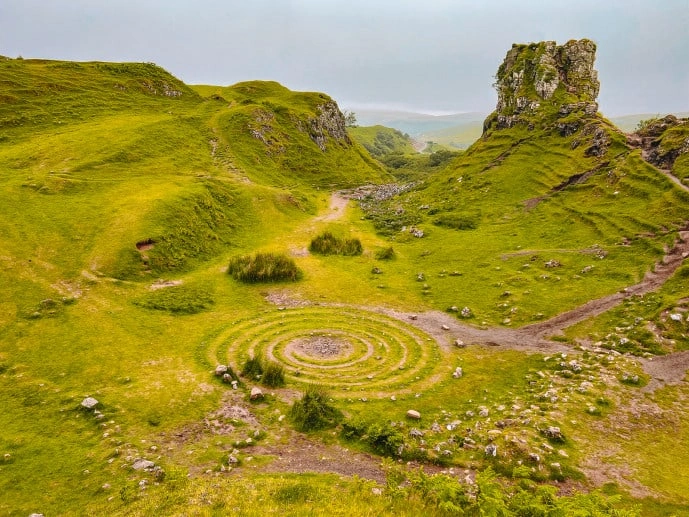
Image Source: Third Eye Traveller
Step into a world where reality blurs with fantasy! The Fairy Glen on Skye enchants visitors with its otherworldly miniature landscape that feels like stepping into a storybook. This captivating location near Uig features whimsical cone-shaped hills, winding paths, and curious rock formations that create a genuinely magical atmosphere despite having no actual fairy legends attached to it.
The Fairy Glen mystical landscape
The Fairy Glen’s unusual terrain was formed by an ancient landslip similar to those that created the Quiraing and the Storr. Its most prominent feature, Castle Ewen, stands as a naturally formed basalt outcrop resembling ruins of a castle. Surrounding this natural fortress, you’ll discover a series of rolling green hills and small ponds that look as if they’ve been pulled straight from a fairytale.
Walking through the gnarly, moss-covered trees creates an expectation of encountering mythical creatures around every corner. The name “Fairy Glen” simply stems from the entrancing landscape itself rather than any traceable legends linking fairies to this area. Yet somehow, this makes the magic feel even more authentic!
The Fairy Glen how to get there
Located on the Trotternish Peninsula, the Fairy Glen lies approximately 1.5 miles from Uig along a narrow single-track road. From Portree, take the A87 north toward Uig. Just before reaching the Uig Hotel, turn right onto the small road signposted to Sheader and Balnaknock (Bail nan cnoc).
Regarding parking:
- A pay-and-display car park operates at the site (£6 as of 2024)
- Both debit and credit cards are accepted
- Limited spaces make early arrival advisable
Alternatively, park in Uig and walk approximately 30 minutes along the tarmac road to reach the glen.
The Fairy Glen best time to visit
Early morning offers the most enchanting experience—typically before 9:30 AM—providing opportunities for solitude in this increasingly popular spot. Visiting during off-peak months such as March or October significantly reduces crowds.
For photographers, the softer light of early morning and late evening accentuates the glen’s mystical quality. Winter visits often feature atmospheric mist that enhances the magical ambience, although paths become muddier and require appropriate footwear.
The entire experience requires about one hour to fully appreciate, making it a perfect addition to a day exploring other Trotternish attractions like the Quiraing and Old Man of Storr. Trust us—this little pocket of magic will leave you absolutely spellbound!
Your Ultimate Highland Gems Quick Reference Guide
Ready to plan your perfect Highland escape? This handy comparison table brings together all the sparkle-worthy details you need to choose your next adventure! Whether you’re dreaming of dramatic waterfalls, ancient forests, or remote beaches, this guide helps you match your wanderlust with the perfect Highland treasure.
| Location | Type/Description | Main Attractions/Features | Access/Getting There | Best Time to Visit | Notable Activities |
| Applecross Peninsula | Remote sanctuary | Bealach na Bà pass (626m high), award-winning seafood spots | Via Scotland’s highest road pass with 20% gradients | Not mentioned | Scenic driving, dining at Applecross Inn |
| Torridon | Geological wilderness | Ancient sandstone mountains (750m years old), 5 Munros | Not mentioned | May-October, best in July | Mountain hiking, coastal walks, photography |
| Glen Nevis | Hidden valley | Steall Falls (105m drop), Nevis Gorge | 3.5km return journey from Upper Falls car park | Evening hours for better light | Waterfall walks, wild swimming, photography |
| Duncansby Head | Coastal headland | 60m high sea stacks, Geo of Sclaites | Well-trodden path, 20-25 minutes each way | Not mentioned | Puffin watching, coastal walking, photography |
| Loch Maree | Fourth-largest freshwater loch | 60+ islands, ancient Caledonian pine forest | Not mentioned | Not mentioned | Kayaking, wildlife watching, island exploration |
| Strathcarron | Railway hamlet | Historic railway station, mountain trails | Via North Coast 500 route or train | Not mentioned | Train journeys, hiking (38 trails available) |
| Glen Affric | National Nature Reserve | Ancient Caledonian pine forest, waterfalls | Multiple marked trails | Summer (busy) or autumn | Forest walks, wildlife spotting, photography |
| Sandwood Bay | Remote beach | Mile-long pink-white sand, Am Buachaille sea stack | 4-mile hike from Blairmore car park | Summer months | Wild camping, hiking, beach walking |
| Falls of Measach | Waterfall gorge | 45m waterfall drop, Victorian suspension bridge | 320m walk from car park | April-October | Bridge crossing, viewpoint visits |
| Loch Arkaig | Freshwater loch | Ancient Caledonian forest, Chia-aig waterfall | Between Fort William and Inverness | Not mentioned | Canoeing, wildlife spotting, butterfly watching |
| Kinloch Hourn | Remote hamlet | Britain’s longest dead-end road (22 miles) | Single-track road from A87 | Not mentioned | Hiking to Knoydart, coastal walking |
| Glen Lyon | Enclosed valley | 34-mile long glen, historic packhorse bridge | Begins near Fortingall village | Autumn for colours | Scenic driving, hiking, mountain climbing |
| Corrour Station | Remote railway station | Highest mainline station in UK (408m) | Train only – no public road access | Not mentioned | Hiking, film location visits, mountain climbing |
| Loch Eriboll | Sea loch | 16km fjord-like inlet, WWII U-boat surrender site | Via A838 road | Winter for bird watching | Wildlife spotting, historical visits |
| The Fairy Glen (Skye) | Miniature landscape | Castle Ewen rock formation, cone-shaped hills | 1.5 miles from Uig | Before 9:30 AM | Walking, photography, landscape exploration |
Perfect for those moments when you need to choose between a dramatic waterfall walk or a mystical fairy glen adventure! Use this as your Highland treasure map to create the ultimate Scottish adventure that’s uniquely yours.
Key Takeaways
Discover Scotland’s most spectacular hidden gems that offer authentic Highland experiences away from crowded tourist trails.
• Plan for remote access: Many locations require single-track roads, lengthy hikes, or train journeys—prepare for challenging but rewarding adventures.
• Time your visits strategically: Early mornings (before 9:30 AM) and off-peak seasons provide solitude and better photography opportunities.
• Pack appropriate gear: Sturdy boots, waterproof clothing, and navigation tools are essential for unpredictable Highland weather and terrain.
• Embrace the journey: The most spectacular locations like Sandwood Bay and Corrour Station are accessible only by foot or train, making the adventure part of the reward.
• Respect local environments: Follow leave-no-trace principles, especially when wild camping or visiting fragile ecosystems like ancient Caledonian forests.
These hidden Highland treasures reward intrepid travellers with pristine landscapes, rich history, and unforgettable experiences that showcase Scotland’s true wilderness character beyond the famous tourist routes.
FAQs
Q1. What is the best way to explore the Scottish Highlands off the beaten path? To discover hidden gems in the Scottish Highlands, consider visiting remote locations like Applecross Peninsula, Glen Affric, or Sandwood Bay. These areas offer stunning landscapes and authentic experiences away from tourist crowds. Be prepared for challenging access routes and pack appropriate gear for the terrain and weather conditions.
Q2. Are there any unique accommodation options in the Scottish Highlands? Yes, the Scottish Highlands offer several unique accommodation experiences. For instance, you can stay at the remote Corrour Station House, accessible only by train. Alternatively, consider wild camping at Sandwood Bay or booking a stay at one of the traditional crofters’ cottages scattered throughout the region.
Q3. What wildlife can I expect to see in the Scottish Highlands? The Scottish Highlands are home to diverse wildlife. You might spot red deer, pine martens, and red squirrels in forested areas like Glen Affric. Coastal areas such as Duncansby Head offer opportunities to see puffins and other seabirds. Lochs like Loch Arkaig are great for spotting otters and various bird species.
Q4. When is the best time to visit the Scottish Highlands for photography? For photography, visit the Scottish Highlands during the shoulder seasons of spring (April-May) or autumn (September-October). These periods offer softer light, dramatic landscapes, and fewer crowds. Early mornings and late evenings provide the best lighting conditions, especially in locations like the Fairy Glen on Skye or Glen Lyon.
Q5. Are there any hidden historical sites in the Scottish Highlands? Yes, the Scottish Highlands are rich in hidden historical sites. For example, Loch Eriboll played a significant role in World War II as a surrender site for German U-boats. Glen Lyon features an ancient packhorse bridge often mistaken for a Roman structure. Many remote glens and lochs also have fascinating local legends and folklore associated with them.