01463 223243

 Find
 Book


The Best Scottish Christmas & New Year traditions is a fascinating topic, thanks to the variety of eras and cultures they borrow from and the 400-year ban on celebrating the holiday completely. We can promise that there is so much to See & Do during the festive season in Inverness. So plan your escape the 4 Star Inverness Palace Hotel & Spa and enjoy some Highland festive-ness
The Best Scottish Christmas & New Year Traditions
This guide will help you if you’re planning on spending any portion of the festive season in Scotland. Here’s what you need to know about local Christmas traditions & New Year traditions to impress friends and family. We’ve also added some tips on fun Christmas and Hogmanay activities in Inverness to help plan your itinerary, there is so much to do at 2025 Inverness Festive-ness..
The History of Christmas in Scotland
Back in pagan times, the winter solstice was widely celebrated in Scotland, marking the longest night of the year. People would bring greenery from the outside in to show that life continued in the darkness, even decorating a tree much like we do today.
By the early middle ages, the Celts knew Christmas as Nollaig Beag or Little Christmas, and celebrations centred around the birth of Christ. Candles were lit in the windows to guide the Holy Family on their way. Mince pies started to be baked, and the filling included the fruit and spices we still use these days, but mincemeat was also included and the pies were large enough to feed friends and neighbours.
Before the Scottish Reformation in 1560, Christmas was commonly known as yule in Scotland and celebrated in a similar way to the rest of the then-Catholic countries. Then, the Reformation of the Scottish church happened and celebrating Christmas largely dropped out of the Scottish shared consciousness, with an outright ban on traditional celebrations. Among other things, baking mince pies became prohibited, leading clever bakers to start making them in the smaller size we know them today so they’d be easier to hide.
Crazy as it may sound, Christmas was not widely celebrated in Scotland again until the 20th century! Christmas Day only became a public holiday in 1958 and Boxing Day in 1971. Before this, people generally worked on these days, having only a light Christmas meal after work and saving their energy for Hogmanay celebrations a week later.


Scottish Christmas Traditions Today
Nowadays, Christmas in Scotland is celebrated in a very similar way to the rest of the UK and many other European and English-speaking countries. Lights are strung up across towns for the festive season and Christmas markets sell locally made goods. Gifts are exchanged on Christmas morning followed by a big feast of turkey with all the trimmings later in the day. Many people will watch the Queen’s speech at 3 PM and spend the rest of the day watching TV and playing games with their family.
Many of the historical Scottish Christmas traditions have slowly died out, though some people still burn rowan tree branches in the fireplace to clear animosity between friends, family members and neighbours. Some of the good Scottish Christmas Traditions remain people still widely enjoy their bite-sized (meat-free) mince pies and a dram or two of whisky!
Celebrating Hogmanay
During the time that Christmas wasn’t widely celebrated in Scotland, much of the feasting and gift-giving associated with it took place during another public holiday: Hogmanay – New Year’s Eve and the few days surrounding it. Scotland has a strong history of New Year traditions. This partly explains why to this day Hogmanay is such a big and colourful celebration in Scotland, with massive street party celebrations in Edinburgh, extravagant firework displays and ancient Viking fire festivals to drive away bad spirits.
The Hogmanay / New Year tradition most widely celebrated in the rest of the English-speaking world is the singing of Auld Lang Syne. This song written by national poet Robert Burns became an anthem for New Year’s celebrations thanks to its lyrics celebrating the passing of time, ushering in a new period and having a drink for old time’s sake. The song is commonly started as the clocks strike midnight on New Year’s Eve, with people in the streets crossing arms and singing in unison.
The Highlanders have shared an old Highland tradition of “first footing” with the rest of Scotland. The “first foot” is the first person to cross the threshold of your home after the bells (midnight). It is customary in Scotland to visit your neighbours and friends after the first stroke of midnight.
There are a few rules if you plan on trying first footing! One of the old myths, is your first foot should be a tall dark man. This is not as unusual as you think. For many years the Highlanders were pillaged by the Vikings and the last person you wanted at your door was a tall blonde man!
You should definitely not go empty handed or without a wallet. In the past the wealth a first footer brought indicates the type of year the household was going to have. You don’t have to hand in your cash but tradition was to show your hosts. Things have lightened up a little, nowadays the favoured tradition is of course to bring a wee dram or beverage to share, a symbol of comfort. Historically some used to bring a lump of coal to signify a year or warmth.


Spend Christmas & New Year in Inverness
The Scottish Highlands are a majestic sight during the holiday period: snow-capped mountains and beautiful old towns and villages lit by Christmas lights make the region a truly romantic holiday destination.
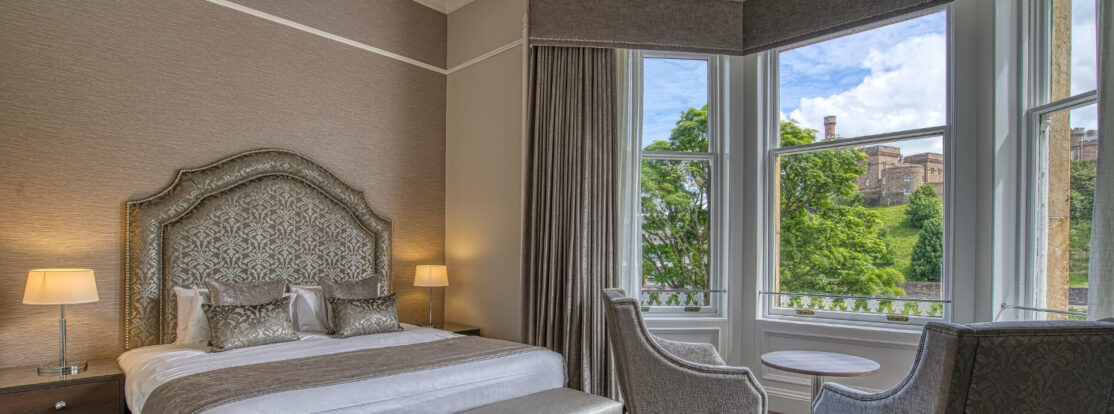
Celebrate the festive season in Inverness with a visit to the Victorian Market for an Elf on the Shelf hunt, or the Christmas Markets at Eden Court theatre or some Unique and Boutique Christmas shopping and of course enjoy the view of the fabulous Inverness Castle Christmas Tree from your room at the Inverness Palace Hotel & Spa. To add a festive touch the Inverness Christmas lights are switched on this year on TBC November 2026.
For something to burn off some of those mince pies, take a leisurely winer walk along the River Ness and across the Ness Islands. You will enjoy their gorgeous festive lights, highlighting the super specimens trees. Alternatively you could head out for a wintry hike around Inverness. You could even drive down to Aviemore to pay a visit to the only free-roaming reindeer herd in the UK!


All Inclusive Christmas & New Year at Inverness Palace Hotel & Spa
Planning a new family tradition this year, book your Christmas break in Inverness. At the Palace Hotel, our staff are the elves bringing you a stress free Christmas. You can bring in the holiday cheer with a fabulously festive afternoon tea complete with Christmas-themed cakes and cocktails and mulled wine jellies – it’s the perfect chance to get all dressed up and indulge yourself! We also offer a number of fabulous All Inclusive festive breaks on our seasonal offers page complete with festive dining, entertainment and an all-inclusive bar every night.
Don’t miss out, celebrate New Year aka Hogmanay in Inverness this year, treat yourself to an All Inclusive New Year at the Palace, this is a 3 night luxury stay with all the extras including a free bar in the evenings!!!
To book your Highland Festive getaway, call us on 01463 223243 or email Palace. From all of us here at the Palace Hotel, Merry Christmas and a Happy New Year!


Frequently Asked Questions
Q1. What’s on in Inverness in December?
In December, Inverness sparkles with festive cheer. You’ll find Christmas lights throughout the city centre, seasonal events at the Victorian Market, and festive performances at Eden Court Theatre ranging from pantomimes to concerts. Local craft fairs pop up, Cawdor Castle Christmas Market, Townhouse Christmas Extravaganza & WASPS Christmas Market offering handcrafted, artisan gifts, and the city’s pubs and restaurants often host special festive menus. Plus the kids will love Inverness Ice Rink Christmas Market with Skating with Santa! It’s a cosy, magical time to visit.
Q2. Is Inverness worth visiting in December?
Yes, absolutely! December is a wonderful time to experience Inverness. The crowds of summer are gone, leaving the city peaceful and welcoming. The atmosphere is festive, with twinkling lights and cosy pubs perfect for warming up after a winter walk. You can also enjoy nearby attractions like Loch Ness, Urquhart Castle, and Culloden Battlefield without the busy summer footfall. And if you’re lucky, you might even see the Highlands dusted in snow.
Q3. How do Scots celebrate New Year?
In Scotland, New Year is known as Hogmanay, and it’s one of the biggest celebrations of the year. Expect lively street parties, fireworks, traditional music, and lots of dancing. A cherished tradition is “first footing”, where the first visitor to a home after midnight brings gifts like coal, shortbread, or whisky for good luck. From big city events in Edinburgh to smaller gatherings in Highland towns, Hogmanay is all about warmth, hospitality, and ringing in the new year together.
Q4. What to do in Inverness during winter?
Winter in Inverness offers plenty to enjoy. You can:
- Take a walk along the River Ness and through the Ness Islands, especially atmospheric on crisp, frosty days.
- Visit Inverness Museum & Art Gallery or enjoy a show at Eden Court Theatre.
- Warm up in a cosy pub with live traditional music and a dram of Highland whisky.
- Head out to Loch Ness or Urquhart Castle for stunning winter scenery.